


RAID Nitrox Plus Course Review
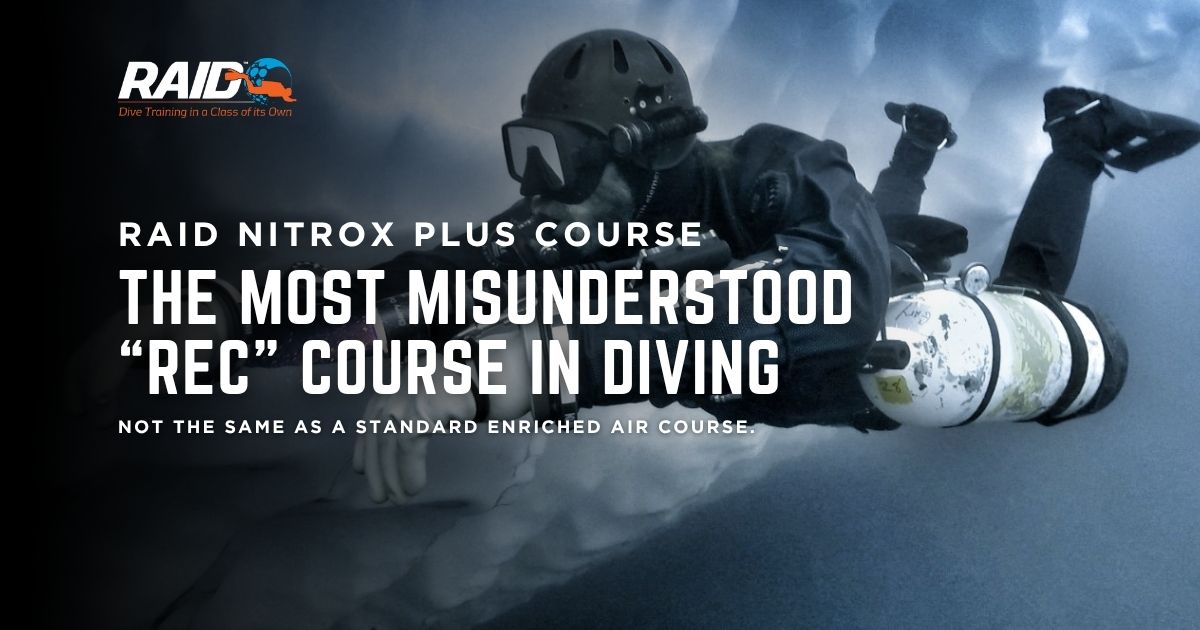
Why the RAID Nitrox Plus is The Most Misunderstood “Recreational” Course in Diving
Last updated: March 2026
If you think the RAID Nitrox Plus course is just another nitrox certification, you’re already misunderstanding it.
This is not the same as a standard enriched air course.
It is not just about getting more bottom time.
And it is definitely not just a “nice-to-have” upgrade.
The RAID Nitrox Plus course sits in a very specific space in diving that most agencies do not clearly define.
It is the bridge between recreational diving and technical diving.
If you approach it like a normal recreational course, you will completely miss its value.
This review breaks down exactly what this course is, how it works in real diving conditions, especially in the UK, and why it is fundamentally different from anything else in the recreational training space.
Quick Verdict
The RAID Nitrox Plus Course is not a standard recreational nitrox course. It is an entry-level decompression and risk management course designed to introduce divers to controlled decompression diving using simplified technical principles.
It stands out because it:
Introduces real decompression diving, up to 10 minutes
Trains divers to use bailout gas systems
Allows use of nitrox up to 50 percent oxygen
Builds technical diving habits early
Best for: Divers who want to move beyond limits, understand decompression, and build a foundation for technical diving.
Not ideal for: Casual divers looking for a quick certification or those expecting a simple “longer dive time” course.
What the RAID Nitrox Plus Course Actually Is
This is where most people get it wrong.
The RAID Nitrox Plus course is not just a nitrox course. You should already be nitrox certified before taking it.
Instead, it trains you to:
Dive to 40 metres / 130 feet
Use air and nitrox up to 50 percent oxygen
Conduct planned decompression dives, up to 10 minutes
Use a single bailout cylinder for safety
Follow structured gas management protocols
This is a major shift from recreational diving.
You are no longer just avoiding decompression. You are learning how to manage it.
The Critical Difference: RAID Nitrox Plus Is NOT a Standard Recreational Course
Let’s be clear.
This course introduces decompression diving.
That alone puts it outside traditional recreational training.
However, it does this in a controlled and simplified way:
Single bottom gas
Single bailout cylinder
Limited decompression, maximum 10 minutes
Be certified as a RAID Sidemount or RAID Twinset Diver if doing the course using either configuration.
This makes it a controlled introduction to technical diving without full technical complexity.
According to RAID standards, this is not an optimised decompression course. It is an introduction to decompression for recreational divers using a stronger risk management approach.
That distinction matters.
You are not learning advanced decompression optimisation. You are learning:
Awareness
Planning
Control
Safety margins
What Actually Matters in This Type of Course
Because this sits between recreational and technical diving, the decision factors change completely.
1. Risk Management, Not Just Dive Time
This course is about reducing risk on deeper dives, not just extending time.
You learn:
Contingency gas planning
Bailout strategies
Conservative decompression
2. Bailout Thinking
This is one of the biggest shifts.
You are no longer relying only on a buddy. You carry your own emergency gas.
That changes how you approach every dive.
3. Controlled Decompression Exposure
Instead of avoiding decompression, you:
Experience it safely
Understand it
Learn how to plan for it
4. Equipment Familiarity
You begin working with:
Additional cylinders
Long hose configurations
More complex setups
5. Mental Load Underwater
This is where many divers struggle.
You are now managing:
Gas switches
Depth limits
Decompression obligations
Real-World Performance and Nitrox Plus Use Cases
This is where Nitrox Plus becomes extremely valuable, especially in UK diving.
UK Wreck Diving (30 to 40 metres)
This is the ideal use case.
Instead of cutting dives short to avoid decompression, you can stay slightly longer and manage a short decompression stop safely.
This is a major upgrade for real exploration diving.
Deep Recreational Dives with a Safety Margin
Even if you do not plan to enter decompression regularly, the skills learned allow you to:
Plan more conservatively
Handle unexpected depth or time overruns
Progression into Technical Diving
This course is one of the cleanest entry points into:
Advanced Nitrox
Decompression procedures
Trimix
It builds the mindset early, which matters more than the depth itself.
RAID Nitrox Plus Course Features and What They Mean
Let’s break this down properly.
Depth Limit: 40 metres
This aligns with deep recreational diving, but now with decompression capability.
Nitrox up to 50 percent
This allows:
Better decompression efficiency
Safer oxygen management
10-Minute Maximum Decompression
This is key.
You are exposed to decompression, but within strict limits.
It keeps the course controlled, safe, and accessible.
Single Bailout Cylinder
This is one of the biggest upgrades from recreational diving.
It means:
You have independent emergency gas
You are responsible for your own ascent safety
Gas Planning Requirements
You must calculate:
SAC rate
Gas consumption
Contingency reserves
This is where diving becomes analytical, not just experiential.
Structured Skill Training
You are trained in:
Gas sharing, both stationary and swimming
Bailout deployment underwater
SMB deployment
Buoyancy and trim control
Long hose recovery
Stage handling
These are all foundational technical diving skills.
Strengths
Introduces decompression safely
Bridges recreational and technical diving
Strong emphasis on real risk management
Builds excellent diving habits early
Highly relevant for UK deep diving
Weaknesses and Trade-Offs
More complex than typical recreational courses
Requires additional equipment such as a bailout cylinder
Not suitable for beginners
Benefits depend on your dive profile
RAID Nitrox Plus vs Standard Nitrox Courses
This is where the difference becomes obvious.
A standard nitrox course:
Does not include decompression
Does not require bailout gas
Focuses on extending bottom time
Requires minimal equipment changes
RAID Nitrox Plus:
Includes decompression, up to 10 minutes
Requires bailout gas
Focuses on risk management
Introduces a technical diving mindset
This is not a small upgrade. It is a completely different category.
Who It’s Best For
Divers regularly diving between 30 and 40 metres
UK wreck divers
Divers preparing for technical training
Those who want real control over their dives
Who Should Avoid It
Newly certified divers
Divers uncomfortable with complexity
Anyone looking for a quick and easy certification
Holiday-only divers doing shallow dives
Common Buyer Mistakes
Thinking this replaces a basic nitrox course
Underestimating equipment requirements
Not understanding bailout gas planning
Taking the course too early in their diving journey
Is It Worth the Money?
Yes, but only if you use it properly.
If you:
Dive deep regularly
Want better safety margins
Plan to move into technical diving
Then this course delivers serious value.
If you do not, it will feel like overkill.
RAID Nitrox Plus Final Verdict
The RAID Nitrox Plus Course is one of the most misunderstood courses in diving.
It is not a simple upgrade.
It is not just about nitrox.
It is a structured introduction to decompression and technical diving principles presented in a way that recreational divers can access.
If you approach it properly, it can completely change how you dive.
If you treat it casually, you will miss its purpose entirely.
Frequently Asked Questions
Is RAID Nitrox Plus a technical diving course?
Not fully, but it is a transitional course that introduces technical diving concepts.
Do you need a nitrox certification first?
Yes. This course builds on existing nitrox knowledge.
Do you do decompression dives in this course?
Yes. Up to 10 minutes of controlled decompression.
Do you need extra equipment?
Yes. Including a bailout cylinder and appropriate configuration.
Is this course suitable for beginners?
No. It requires prior experience and certifications.